
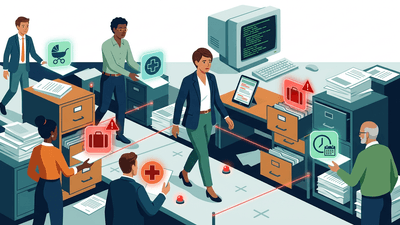



For the first time in modern history, United States employers are managing a workforce that spans four—and sometimes five—distinct generations. While diversity in age brings a wealth of varied experience to the table, it also introduces unprecedented complexity into human resources operations. Nowhere is this complexity more legally fraught than in how employees take time off.
According to a revealing new report by AbsenceSoft, employees across all generations generally feel comfortable requesting leaves of absence. However, the reasons driving these requests vary wildly by age group. This divergence is quietly transforming traditional, manual leave management processes into a ticking compliance time bomb for US employers.
As HR professionals navigate a labyrinth of federal regulations like the Family and Medical Leave Act (FMLA), the Americans with Disabilities Act (ADA), and an ever-expanding patchwork of state-level Paid Family and Medical Leave (PFML) laws, relying on spreadsheets and legacy software is no longer just inefficient—it is a critical financial liability.
The Generational Divide in Leave Requests
The AbsenceSoft study highlights a fundamental shift in workplace culture: the stigma around taking extended leave is dissipating. Yet, the catalyst for stepping away from work looks entirely different depending on the birth year of the employee.
Younger workers, particularly Gen Z and Millennials, are increasingly utilizing leave for mental health reasons, burnout recovery, and parental bonding. In contrast, Gen X and Baby Boomers are more likely to request time off for personal medical procedures, chronic health management, or eldercare responsibilities.
"When the reasons for leave diversify, the regulatory frameworks governing them multiply. A mental health leave for a Gen Z employee might trigger ADA accommodation requirements, while a Boomer's eldercare leave falls squarely under FMLA or state-specific family leave laws."
This generational split exposes employers to significant compliance risks if their HR teams lack the tools to accurately track, categorize, and manage these disparate requests. Misclassifying a leave, missing a regulatory notification deadline, or failing to offer legally mandated job protection can result in costly EEOC investigations, class-action lawsuits, and severe reputational damage.
Mapping the Compliance Landscape
To understand the scope of the challenge, HR leaders must map the primary drivers of leave against the corresponding regulatory frameworks.
| Generation | Primary Leave Drivers | Key Compliance Frameworks |
|---|---|---|
| Gen Z (born 1997-2012) | Mental health, preventative care, stress leave | ADA, State PFML, FMLA (if eligible) |
| Millennials (born 1981-1996) | Parental leave, mental health, childcare | FMLA, Pregnant Workers Fairness Act (PWFA), State PFML |
| Gen X (born 1965-1980) | Eldercare, personal medical conditions | FMLA, ADA, State PFML |
| Boomers (born 1946-1964) | Chronic illness, surgery recovery, caregiving | FMLA, ADA |
Operational Ripple Effects: The Cost of Mismanagement
The implications of generational leave trends extend far beyond legal compliance; they strike at the very heart of operational continuity. When employees take leave—especially unplanned or intermittent leave—shifts are left open, productivity stalls, and the burden falls on the remaining staff.
This operational vulnerability is particularly acute in shift-based industries like healthcare, manufacturing, and retail. A recent report by ShiftMed on Open Shift Management illustrates the staggering financial impact of this dynamic. Looking specifically at the US healthcare sector, ShiftMed identified a structural "premium labor gap" across major markets.
When core employees take leave and shifts go unfilled, organizations are forced to rely on expensive premium labor—such as travel nurses or overtime pay—to maintain operations. The ShiftMed findings suggest that optimizing open shift management could save the healthcare industry billions of dollars annually. For HR professionals across all sectors, the lesson is clear: modernizing leave management must go hand-in-hand with modernizing workforce scheduling.
Bridging the Gap Between Leave and Scheduling
To mitigate the operational shockwaves of employee leave, HR must break down the silos between absence management and workforce scheduling. When a leave request is approved, the scheduling system should instantly reflect the upcoming vacancy, allowing managers to fill the open shift proactively with internal staff at standard rates, rather than reactively with premium external labor.
The Tech Imperative: Automating the Administrative Burden
Managing the intersection of complex, multi-generational leave laws and dynamic shift scheduling is beyond human capacity—at least, if HR teams are expected to do it manually while also focusing on strategic initiatives. The solution lies in aggressive, smart technological adoption.
Forward-thinking organizations are already making massive investments in AI to handle the administrative heavy lifting. A prime example is the recent move by global talent advisory firm The Adecco Group. According to recent industry news, The Adecco Group has signed a multi-year agreement with Salesforce to deploy Agentforce 360. This partnership aims to scale "agentic AI" to automate routine recruitment and administrative tasks globally.
While Adecco's focus in this deal leans toward recruitment, the underlying principle is exactly what HR needs for leave management: deploying human-centric AI to automate routine workflows. By utilizing agentic AI—systems that can autonomously execute multi-step processes rather than just answering queries—HR can automate the initial intake of leave requests, verify eligibility against federal and state laws, and automatically notify scheduling software of impending absences.
A Strategic Action Plan for US HR Professionals
The convergence of generational leave trends, operational labor gaps, and the rise of agentic AI presents a clear mandate for HR leaders. To protect your organization from compliance risks and operational bloat, consider the following strategic steps:
- Conduct a Leave Policy Audit: Review your current leave policies to ensure they are inclusive of generational needs. Are your mental health leave policies as robust and clearly communicated as your surgical recovery policies? Ensure all policies align with the latest PWFA, ADA, and state PFML guidelines.
- Invest in Purpose-Built Absence Tech: Transition away from spreadsheets and generic HRIS modules that require manual compliance updates. Invest in specialized absence management software (like AbsenceSoft) that automatically updates to reflect the latest state and federal regulations.
- Integrate Leave and Scheduling Systems: Follow the insights from the ShiftMed report. Ensure your absence management software communicates directly with your workforce scheduling tools to proactively manage open shifts and reduce reliance on premium labor.
- Deploy AI for Administrative Triage: Look to models like the Adecco Group's use of Agentforce 360. Implement AI tools to handle the routine administrative tasks of leave intake and eligibility verification, freeing up your HR team to handle complex, nuanced employee conversations with empathy.
Conclusion: From Administrators to Strategists
The modern workforce is diverse, dynamic, and demanding. As different generations exercise their right to take leave for vastly different reasons, the strain on traditional HR systems will only intensify. The organizations that thrive in this environment will be those that view leave management not as a back-office administrative chore, but as a critical component of risk management and operational strategy.
By embracing modernized absence management platforms, optimizing shift scheduling to plug labor gaps, and leveraging AI to handle the administrative burden, HR professionals can protect their companies from compliance nightmares. More importantly, they can transition from being mere enforcers of policy to strategic leaders who ensure both employee well-being and business continuity in an increasingly complex world.