
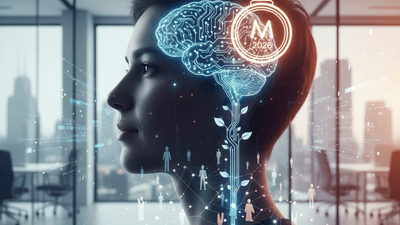



In a United States labor market still shaking off the remnants of systemic burnout, the healthcare sector has long been the undisputed epicenter of employee exhaustion. High turnover rates, crippling talent shortages, and immense emotional tolls are the industry's daily reality. Yet, against this challenging backdrop, a different narrative is emerging—one of profound organizational resilience. When Maxim Healthcare Services earned the 2026 Great Place To Work Certification™, it didn't just add a digital badge to its corporate site; it sent a powerful signal to HR professionals across the country. Building an award-winning culture in a high-stress industry is not only possible, but it is also the prerequisite for surviving the next evolution of work.
For HR leaders, Maxim's achievement is more than a feel-good story; it is a vital case study in bridging the gap between foundational employee satisfaction and future-focused organizational agility. To understand why this matters right now, we have to look at this win through the lens of Deloitte's 2026 Global Human Capital Trends report, which boldly declares that organizations need more "imagination" in a disrupted, boundaryless age. The intersection of these two milestones provides a definitive roadmap for the future of human resources in the US.
The Anatomy of a "Great Place to Work" in 2026
The Great Place To Work Certification is not handed out for having a well-stocked breakroom or offering occasional Friday afternoons off. It is a rigorously data-driven assessment based entirely on the confidential feedback of employees, measuring the core tenets of trust, pride, and camaraderie. For a company like Maxim Healthcare—which deploys nurses, allied health professionals, and administrative staff across diverse, often high-pressure environments—achieving this certification speaks volumes about their internal communication and support structures.
In 2026, the definition of a great workplace has fundamentally shifted. US workers are no longer wooed by superficial perks. Instead, they are demanding psychological safety, transparent leadership, and a tangible commitment to their holistic well-being. Maxim’s success indicates a strategic HR focus on treating employees not as expendable resources, but as vital stakeholders in the company's mission.
"Reinvention is no longer a strategic pivot; it is the new baseline for work and the workforce. But reinvention requires imagination, and imagination requires a workforce that feels secure, valued, and empowered to think beyond traditional boundaries."
Deloitte’s Imperative: Imagination in a Boundaryless Age
While Maxim is mastering the foundational elements of trust, Deloitte’s 2026 Global Human Capital Trends report pushes the HR discipline to look toward the horizon. The report highlights that we have fully entered a "boundaryless age." Traditional job descriptions, rigid hierarchical structures, and siloed departments are rapidly becoming obsolete. In their place, Deloitte argues, organizations must cultivate imagination to drive continuous reinvention.
The Paradox of Imagination in Regulated Industries
At first glance, "imagination" and "healthcare staffing" might seem like a paradoxical pairing. Healthcare is heavily regulated, compliance-driven, and relies on strict adherence to protocols to ensure patient safety. How does an HR leader foster boundaryless imagination in such a rigid environment?
The answer lies in how we define the boundaries of work. Imagination in this context doesn't mean abandoning clinical protocols; it means reinventing how work is structured, when it is done, and who does it. It means using imagination to solve the scheduling nightmares that lead to nurse burnout. It means redefining career pathways so an allied health professional isn't locked into a single linear trajectory.
This is where Maxim's certification and Deloitte's trends collide perfectly: You cannot ask a workforce to imagine a better way of working if they do not trust their employer. Trust is the currency that buys organizational imagination.
Reinventing the US Workforce: Practical Implications for HR
For HR professionals operating in the United States, the synthesis of these two industry markers offers actionable insights. Whether you are in healthcare, tech, manufacturing, or retail, the playbook for 2026 and beyond requires a dual focus on foundational trust and structural reinvention.
- Prioritize Psychological Safety as a Business Metric: Before you can ask employees to innovate, they must feel safe failing. Regular pulse surveys, transparent leadership communication, and robust mental health support systems are non-negotiable.
- Shift from Jobs to Skills: In a boundaryless age, rigid job descriptions limit potential. HR must map the latent skills within their workforce and deploy talent fluidly based on project needs rather than job titles.
- Empower Frontline Imagination: The best ideas for reinvention rarely come from the C-suite; they come from the frontline workers experiencing the friction. Create structured, incentivized channels for frontline employees to suggest operational improvements.
- Redefine Flexibility Beyond Remote Work: In industries like healthcare where remote work isn't always possible, flexibility must be reimagined. This could mean micro-shifts, shift-bidding platforms, or job-sharing models that give workers autonomy over their time.
Old Paradigm vs. The 2026 Boundaryless Model
To truly grasp the shift required, HR leaders must contrast the traditional methods of talent management with the new baseline of work outlined by the events of 2026.
| HR Focus Area | The Old Paradigm (Pre-2024) | The 2026 Boundaryless Model |
|---|---|---|
| Talent Retention | Compensation increases and superficial office perks. | Deep trust, psychological safety, and radical flexibility. |
| Work Structure | Rigid job descriptions and siloed departmental duties. | Skills-based deployment and fluid, cross-functional teams. |
| Innovation Source | Top-down directives from executive leadership. | Frontline imagination and democratized problem-solving. |
| Employee Value | Measured by hours logged and immediate output. | Measured by adaptability, continuous learning, and well-being. |
The Path Forward for HR Leaders
The recognition of Maxim Healthcare as a Great Place To Work in 2026 is a beacon of hope for challenging industries. It proves that even in environments plagued by systemic stress, intentional HR strategies can build cultures where people feel profoundly valued. However, as Deloitte's Human Capital Trends remind us, building a great culture is no longer the finish line—it is the starting block.
As we navigate this boundaryless age, HR leaders must step into the role of organizational architects. We must build foundations of trust strong enough to support the weight of continuous reinvention. By fostering environments where employees are not just surviving, but are empowered to use their imagination to reshape their daily realities, we don't just win workplace awards. We future-proof our organizations against whatever disruptions lie ahead.