
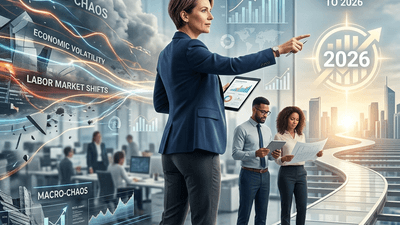



In the trenches of 2026’s talent landscape, a quiet but profound phenomenon is reshaping the C-suite: the strategic human resources reset. Across higher education, corporate enterprises, and the public sector, chief executives are increasingly hitting the pause button on their HR departments, opting for departmental shakeups and interim leadership to realign their talent strategies with a rapidly mutating labor market.
A prime example of this structural pivot unfolded recently when Eastern Michigan University President Brendan Kelly announced significant staff changes within the university's human resources department, notably installing a new interim chief human resources officer (CHRO). While localized to a single university, EMU's move is a microcosm of a nationwide trend. Organizations are realizing that the HR playbook of 2023 is fundamentally incompatible with the realities of 2026.
Rather than rushing to fill permanent seats with legacy thinkers, executives are utilizing interim leadership to audit, restructure, and prepare their HR functions for a new triad of operational mandates. According to recent analysis by SHRM, these mandates include navigating unprecedented AI chaos, adapting to severe labor market demographic shifts, and pivoting toward a model of structurally supportive leadership.
The Rise of the 'Interim' Strategy in HR
Historically, an interim CHRO was viewed as a stopgap—a temporary placeholder to keep the payroll running and compliance in check while executive search firms hunted for a permanent replacement. In 2026, the interim CHRO has evolved into a highly specialized role akin to a corporate turnaround consultant.
When leaders like EMU's President Kelly announce departmental reorganizations, it signals a deliberate unfreezing of legacy systems. Interim HR leaders are uniquely positioned to make difficult structural changes, audit outdated technology stacks, and redefine the department's core competencies without the political baggage of long-term tenure.
"The interim CHRO of 2026 is the organizational icebreaker. They are brought in not to maintain the status quo, but to clear the navigational hazards—be it bloated legacy software, misaligned compensation models, or outdated compliance frameworks—so the permanent successor can sail into clear waters."
Redefining the HR Leadership Profile
To understand why this reset is necessary, we must examine the shifting expectations placed on HR leadership. The modern CHRO must balance technological fluency with deep demographic insights.
| Capability Domain | The Legacy CHRO Mandate | The 2026 Transition-Era Mandate |
|---|---|---|
| Technology | Procuring and implementing HRIS platforms. | Navigating AI integration, data ethics, and algorithmic bias. |
| Demographics | Managing standard retirement and recruitment pipelines. | Engineering complex knowledge-transfer systems for a barbell workforce (aging boomers vs. Gen Z). |
| Leadership Style | Risk mitigation and policy enforcement. | Architecting structurally supportive leadership frameworks. |
Tackling the SHRM Triad: AI, Demographics, and Support
The structural resets we are seeing in HR departments are almost entirely driven by the need to address three macro-trends highlighted by SHRM's labor market intelligence. Organizations that fail to adapt their HR functions to these realities risk irrelevance in the war for talent.
1. Navigating "AI Chaos" and Skills Development
We have officially moved past the honeymoon phase of artificial intelligence in the workplace and entered a period of "AI chaos." Employees are adopting generative AI tools faster than IT and HR can regulate them, creating shadow IT networks and significant compliance risks. Concurrently, the half-life of technical skills is shrinking at an alarming rate.
HR departments undergoing reorganization are primarily doing so to shift their focus from managing employees to managing capabilities. The new HR mandate requires building agile upskilling frameworks that can keep pace with AI advancements. It is no longer enough to offer an annual training seminar; HR must integrate continuous AI skills development into the daily workflow, ensuring that the workforce augments its output with AI rather than being displaced by it.
2. The Demographic Collision
The U.S. labor market is undergoing a profound demographic shift. The mass exodus of the Baby Boomer generation is accelerating, taking decades of institutional knowledge with it. Simultaneously, Gen Z—a cohort with radically different expectations regarding flexibility, purpose, and compensation—is making up a rapidly growing share of the workforce.
When organizations restructure their HR leadership, they are often looking for visionaries who can bridge this demographic divide. This requires dismantling one-size-fits-all benefits packages and replacing them with hyper-personalized rewards systems. It also demands the creation of robust mentorship and knowledge-capture programs before senior talent ages out of the workforce entirely.
3. The Shift to Supportive Leadership
Perhaps the most challenging cultural shift identified by SHRM is the demand for supportive leadership. After years of pandemic whiplash, economic uncertainty, and return-to-office battles, employee trust in executive leadership is fragile. The traditional "command and control" management style is now a primary driver of turnover.
HR's new role is to operationalize support. This means training middle managers to act as coaches rather than taskmasters, redesigning performance metrics to reward team development, and ensuring that mental health and financial wellness benefits are easily accessible, not hidden behind bureaucratic red tape. Interim HR leaders are often tasked with diagnosing toxic management cultures and laying the groundwork for this supportive pivot.
Actionable Steps for U.S. HR Professionals
Whether you are stepping into an interim leadership role, navigating a departmental restructuring, or simply trying to future-proof your current HR function, the path forward requires intentional alignment with these macro-trends. Here is how HR teams can adapt:
- Conduct a Capability Audit: Before purchasing new AI tools or launching new initiatives, honestly assess your HR team's current skill set. Do you have the data literacy required to manage algorithmic HR tech? If not, upskill the HR team first.
- Formalize Knowledge Transfer: Do not let institutional knowledge walk out the door. Implement structured phased-retirement programs that pair exiting senior employees with high-potential junior staff for mandatory mentorship and process documentation.
- Redefine Managerial KPIs: To foster supportive leadership, change how managers are evaluated. Tie a portion of managerial bonuses or performance reviews directly to team retention rates, internal mobility, and employee well-being scores.
- Embrace the "Interim" Mindset: Even if you are in a permanent role, adopt the objective, diagnostic mindset of an interim leader. Regularly ask: "If I were brought in today to fix this department, what legacy process would I immediately eliminate?"
Looking Ahead: The Agile HR Function
The staff changes at Eastern Michigan University and the macro-trends tracked by SHRM both point to the same inevitable conclusion: the HR function of the late 2020s must be ruthlessly agile. The days of set-it-and-forget-it policies are over.
As we navigate the remainder of 2026, the most successful organizations will be those that view HR not as an administrative cost center, but as the strategic engine for navigating AI chaos and demographic transformation. Sometimes, building that engine requires a temporary pause, a change in leadership, and a willingness to rebuild from the ground up.